
June: Alzheimer’s & Brain Awareness Month
Liyah U. Ruffin, Marcia Mastracci Ditmyer, PhD, MBA, MS

Brief History
The first documented case of Alzheimer’s disease was described in 1906 by German psychiatrist and neuropathologist Dr. Alois Alzheimer. He reported the case of a 50-year-old woman who experienced profound memory loss, paranoia, and progressive cognitive decline. Although the condition had been recognized for decades, Alzheimer’s disease was formally established as a major public health concern in the 1970s. This led to the creation of the Alzheimer’s Association, whose mission has been to increase awareness, reduce stigma, support caregivers, strengthen community resources, advance clinical research, and promote brain health.
We would love to hear from you!
Make your voice heard by advocating for public health matters:
MPHA is seeking Board nominees for the 2026-2028 term:
Today, that legacy continues through efforts focused on the early identification of cognitive decline, risk reduction strategies, and the delivery of high-quality care and support for individuals and families affected by the disease.
What is Alzheimer’s? Why Brain Health Matters
Alzheimer’s disease is a progressive neurodegenerative disorder characterized by memory loss, impaired thinking and reasoning, and a gradual decline in the ability to perform everyday activities. Although the terms Alzheimer’s disease and dementia are often used interchangeably, they are not synonymous. Alzheimer’s disease is a specific condition that accounts for approximately 60% to 80% of all dementia cases, whereas dementia is a broader term encompassing a variety of neurocognitive disorders.¹ Cognitive impairment and dementia may also result from other causes, including stroke, traumatic brain injury, or reduced blood flow to the brain.
In 2026, an estimated 7.4 million Americans aged 65 years and older are living with Alzheimer’s disease, with nearly 74% of those affected being age 75 or older.² Approximately one in nine adults aged 65 and older has Alzheimer’s disease. At age 45, the lifetime risk of developing Alzheimer’s disease is estimated to be one in five for women and one in ten for men.² Although Alzheimer’s is commonly associated with older adults, younger individuals may also develop the disease. Researchers estimate that approximately 110 out of every 100,000 adults between the ages of 30 and 64 years develop young-onset dementia.²
The burden of Alzheimer’s disease continues to grow. Mortality associated with Alzheimer’s disease more than doubled between 2000 and 2024, while mortality from heart disease—the leading cause of death in the United States—declined during the same period.² In 2024, Alzheimer’s disease was the fifth leading cause of death among adults aged 65 years and older.²
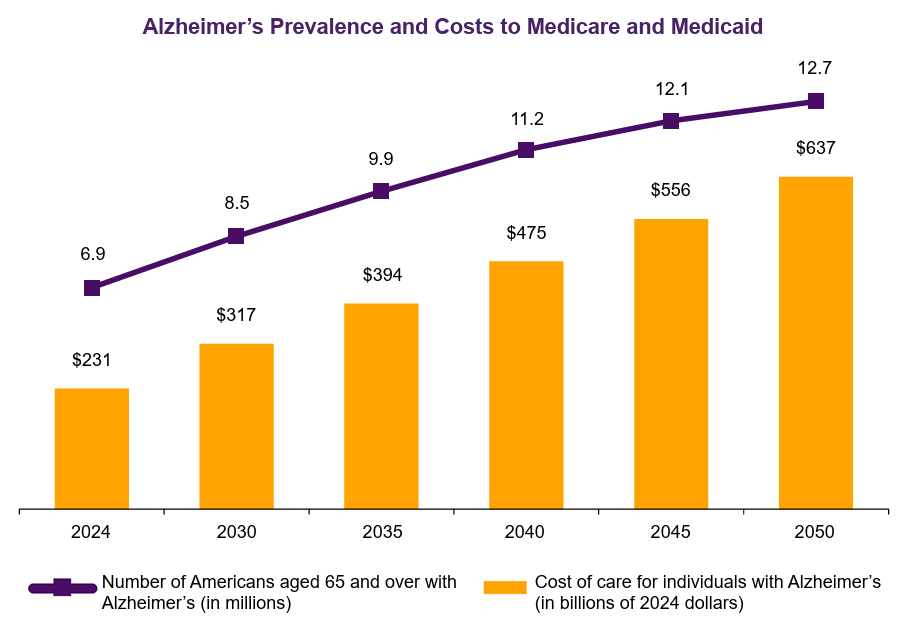
Beyond its impact on health and quality of life, Alzheimer’s disease imposes a tremendous economic burden. In 2024, the total cost of caring for individuals with Alzheimer’s disease and other dementias was estimated at $360 billion, with projections approaching $1 trillion by 2050.³ Medicare and Medicaid expenditures accounted for approximately $231 billion, representing 64% of total costs.⁴ Average Medicare spending for older adults with Alzheimer’s disease is approximately 2.8 times higher than spending for other older adults, while Medicaid spending is more than 22 times greater.⁴
Figure 1 illustrates the projected growth in Medicare and Medicaid expenditures associated with Alzheimer’s disease and related dementias in the coming decades.
Alzheimer’s Disease in Michigan
Alzheimer’s disease represents a growing public health challenge in Michigan and is projected to affect an increasing number of residents in the coming decades. Currently, approximately 203,000 Michiganders aged 65 years and older are living with Alzheimer’s disease.⁵ In addition, nearly 16.9% of adults aged 45 years and older report experiencing subjective cognitive decline.⁵ In 2024, Alzheimer’s disease accounted for 4,404 deaths in Michigan, giving the state the eighth-highest Alzheimer’s mortality rate in the United States.⁵˒⁶
Caregiver Shortages and Workforce Challenges
An emerging issue threatening the quality and accessibility of Alzheimer’s care is the growing shortage of caregivers, both nationally and within Michigan. Across the United States, more than 32 million individuals serve as paid caregivers, while an estimated 45 million provide unpaid care to family members and loved ones.⁷ In Michigan alone, approximately 640,000 people serve as paid caregivers and another 1.3 million provide unpaid care.⁷
Several factors contribute to this workforce crisis, including inadequate clinical oversight and training, low wages despite the demanding nature of caregiving, and challenges associated with insurance coverage and reimbursement. These issues place increasing pressure on families and healthcare systems and threaten the availability and quality of care for individuals living with Alzheimer’s disease and related dementias.
These challenges underscore the importance of continued advocacy, particularly during Alzheimer’s and Brain Health Awareness Month. Strengthening awareness and public policy efforts can help address workforce shortages, reduce Alzheimer’s-related mortality, promote early diagnosis and treatment, and expand access to quality care and support services for all Michiganders.
Top 10 Signs & Symptoms of Alzheimer’s Disease — CDC8
According to the Centers for Disease Control and Prevention (CDC), individuals exhibiting one or more of the following warning signs should seek evaluation from a healthcare professional:⁸
- Memory loss that disrupts daily life.
- Challenges in planning or solving problems.
- Difficulty completing familiar tasks at home, at work, or at leisure.
- Confusion with time or place.
- Trouble understanding visual images and spatial relations.
- New problems with words in speaking or writing.
- Misplacing things and not being able to retrace steps.
- Decreased or poor judgment.
- Withdrawal from work or social activities.
- Changes in mood or personality.
How Can You Help?
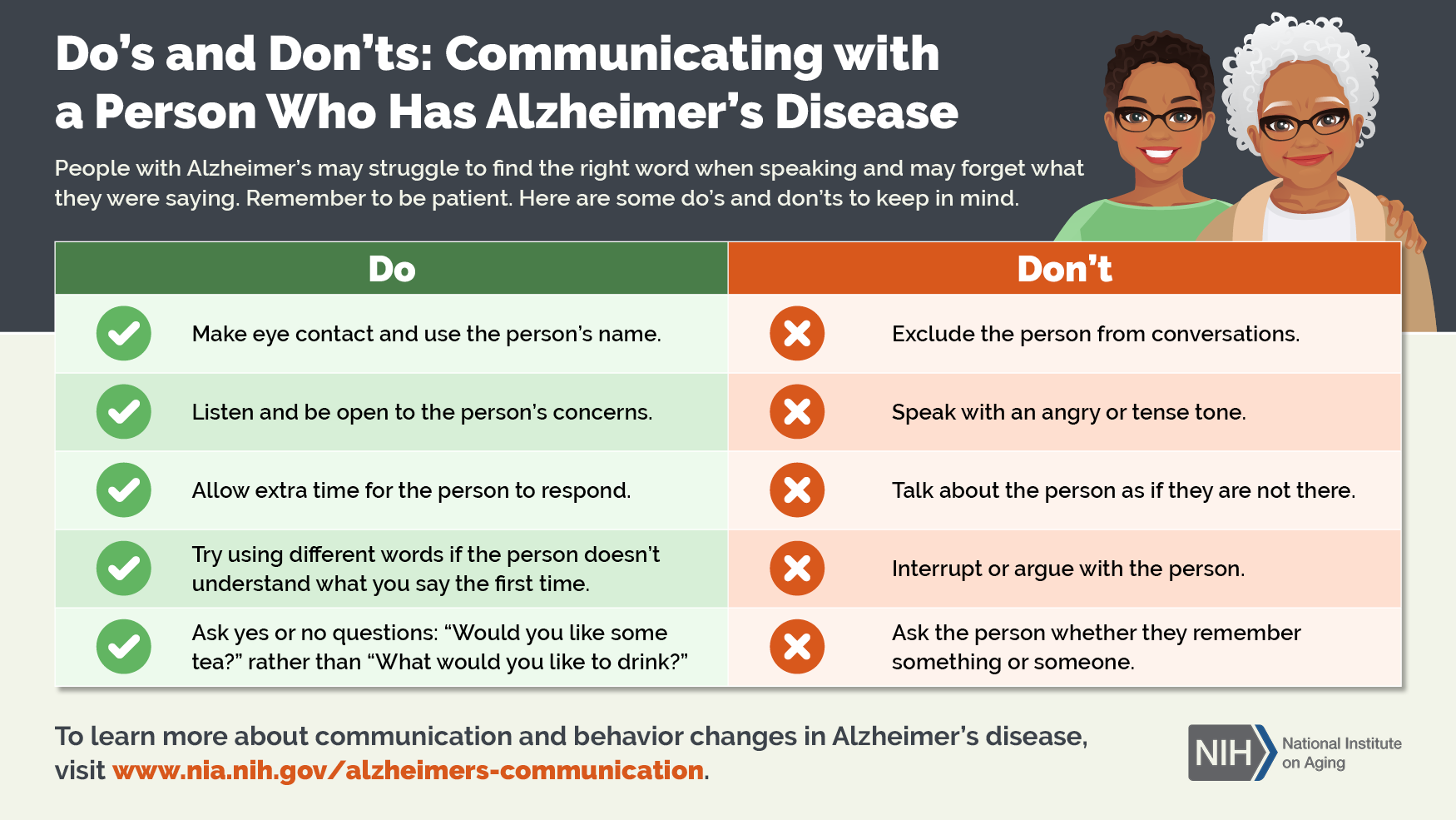
With millions of adults living with Alzheimer’s disease and related dementias, it is important to recognize that individuals affected by these conditions may experience memory loss, confusion, and difficulty communicating. They may forget conversations, familiar people, or even where they are. These challenges can be frustrating and frightening for both the individual and their loved ones.
To help improve communication and foster meaningful interactions, the National Institute on Aging (NIA) has developed a “Do’s and Don’ts” guide, shown in Figure 2. These recommendations provide practical strategies for communicating effectively with individuals living with Alzheimer’s disease while preserving their dignity, independence, and sense of self.
Simple acts of patience, empathy, and respect can make a significant difference. Compassionate communication can reduce agitation, minimize frustration, and help maintain emotional security and quality of life when communication becomes increasingly difficult. By understanding the needs of individuals living with Alzheimer’s disease, families, caregivers, and communities can help ensure that those affected are treated with the dignity and support they deserve.
Call to Action in Michigan
Advocacy for Alzheimer’s disease and brain health remains a public health priority in Michigan as the burden of cognitive decline continues to grow among older adults. Although Alzheimer’s disease cannot be completely prevented because of genetic factors, research suggests that up to 40% of cases may be delayed or prevented through modification of known risk factors.¹⁰
Adopt Healthy Lifestyle Choices
Protecting brain health begins with everyday habits. Individuals can reduce their risk of cognitive decline by:
- Monitoring and managing blood pressure.
- Eating a healthy, balanced diet.
- Staying physically active.
- Maintaining social connections with family and friends.
- Limiting alcohol consumption and avoiding tobacco use.
- Prioritizing quality sleep.
- Engaging in mentally stimulating activities that challenge and maintain cognitive function.
Seek Expert Guidance
Early evaluation and treatment are essential to maintaining brain health. Individuals should:
- Consult a healthcare professional to assess their current health status and identify potential risk factors.
- Seek specialized care from a neurologist or geriatrician for individualized guidance regarding cognitive and physical health.
- Work with healthcare providers and caregivers to develop personalized care plans and learn strategies for supporting loved ones living with Alzheimer’s disease.
Invest in Research and Innovation
Clinical research plays a critical role in improving brain health and advancing the fight against Alzheimer’s disease. Research helps identify effective treatments, determine preventive strategies, and move us closer to finding a cure.
Individuals interested in learning more can:
- Explore the Alzheimer’s Disease Research Centers Directory to locate academic medical centers conducting dementia research.
- Search National Institute on Aging (NIA)-funded clinical trials to learn about emerging therapies and interventions.
- Support nonprofit organizations, such as the Alzheimer’s Foundation of America, which provide grants and resources to strengthen community-based support services.
Access Local Resources and Support
Michigan residents have access to a variety of services designed to support individuals living with Alzheimer’s disease and their caregivers.
- The Region 7 Area Agency on Aging (800-858-1637) and the Saginaw County Commission on Aging (989-797-6880) provide care management, respite services, and guidance on funding options, including Medicaid waivers.
- The Alzheimer’s Association offers care consultations, support groups, educational resources, and a 24/7 Helpline at 800-272-3900.
- Medicaid and other government programs may help offset the costs of long-term care and medications. Individuals are encouraged to explore available benefits and determine their eligibility for assistance.
- Community members interested in supporting Alzheimer’s research, care, and advocacy are encouraged to participate in the 2026 Walk to End Alzheimer’s in Saginaw, Michigan, on September 27, 2026. Funds raised support research initiatives, patient and family services, and public policy efforts aimed at improving the lives of those affected by Alzheimer’s disease.
Act Now
Brain health is fundamental to overall health and well-being. It influences how we think, learn, communicate, regulate emotions, and maintain independence throughout life. This year’s theme, “(Re)Think Your Brain,” encourages individuals of all ages to take action to protect their cognitive health.
Brain health is not just an issue for older adults. Young and middle-aged adults can also benefit from adopting healthy behaviors that may reduce their risk of cognitive decline later in life. By investing in brain health today, individuals can help ensure healthier, more resilient, and more fulfilling lives in the years ahead.
The time to act is now. Protect your brain. Support those affected by Alzheimer’s disease. And work together to create healthier communities for all Michiganders.
References
- Alzheimer’s Association. 2026 Alzheimer’s disease facts and figures. Alzheimer’s Association. Available from: https://www.alz.org/alzheimers-dementia/facts-figures
- Alzheimer’s Association. What is the difference between dementia and Alzheimer’s disease? Alzheimer’s Association. Available from: https://www.alz.org/alzheimers-dementia/difference-between-dementia-and-alzheimer-s
- Centers for Disease Control and Prevention. Chronic disease facts and statistics. Atlanta (GA): U.S. Department of Health and Human Services, Centers for Disease Control and Prevention; [cited 2026 Jun 7]. Available from: https://www.cdc.gov/chronic-disease/data-research/facts-stats/index.html
- Alzheimer’s Impact Movement. Alzheimer’s disease facts and figures special report. Washington (DC): Alzheimer’s Impact Movement; Available from: https://portal-legacy.alzimpact.org/media/serve/id/62509c7a54845
- Alzheimer’s Association. Michigan state overview. Alzheimer’s Association. Available from: https://www.alz.org/professionals/public-health/state-overview/michigan
- Michigan Department of Health and Human Services. Alzheimer’s disease mortality statistics for Michigan. Lansing (MI): Michigan Department of Health and Human Services. Available from: https://vitalstats.michigan.gov/osr/chi/CRI/CriticalInd/CRIST.asp?TableType=Alzheimers&CoName=Michigan&CoCode=0
- Caregiver Incentive Project. The caregiver crisis: understanding the problem. Caregiver Incentive Project. Available from: https://caregiverincentiveproject.org/problem/
- Centers for Disease Control and Prevention. Signs and symptoms of Alzheimer’s disease. Atlanta (GA): U.S. Department of Health and Human Services, Centers for Disease Control and Prevention; [cited 2026 Jun 7]. Available from: https://www.cdc.gov/alzheimers-dementia/signs-symptoms/alzheimers.html
- National Institute on Aging. Do’s and don’ts for communicating with a person who has Alzheimer’s disease. Bethesda (MD): National Institute on Aging, National Institutes of Health; [cited 2026 Jun 7]. Available from: https://www.nia.nih.gov/health/alzheimers-changes-behavior-and-communication/dos-and-donts-communicating-person-who-has
- Weill Cornell Medicine. Alzheimer’s disease may be preventable. New York (NY): Weill Cornell Medicine. Available from: https://weillcornell.org/news/alzheimer%E2%80%99s-disease-may-be-preventable
Updated 06/08/2026