
Immunization: Protecting Michigan Communities Through Prevention
Christina Sellers, MSN, APRN, FNP-BC; Marcia M. Ditmyer, PhD
We would love to hear from you!
Make your voice heard by advocating for public health matters:
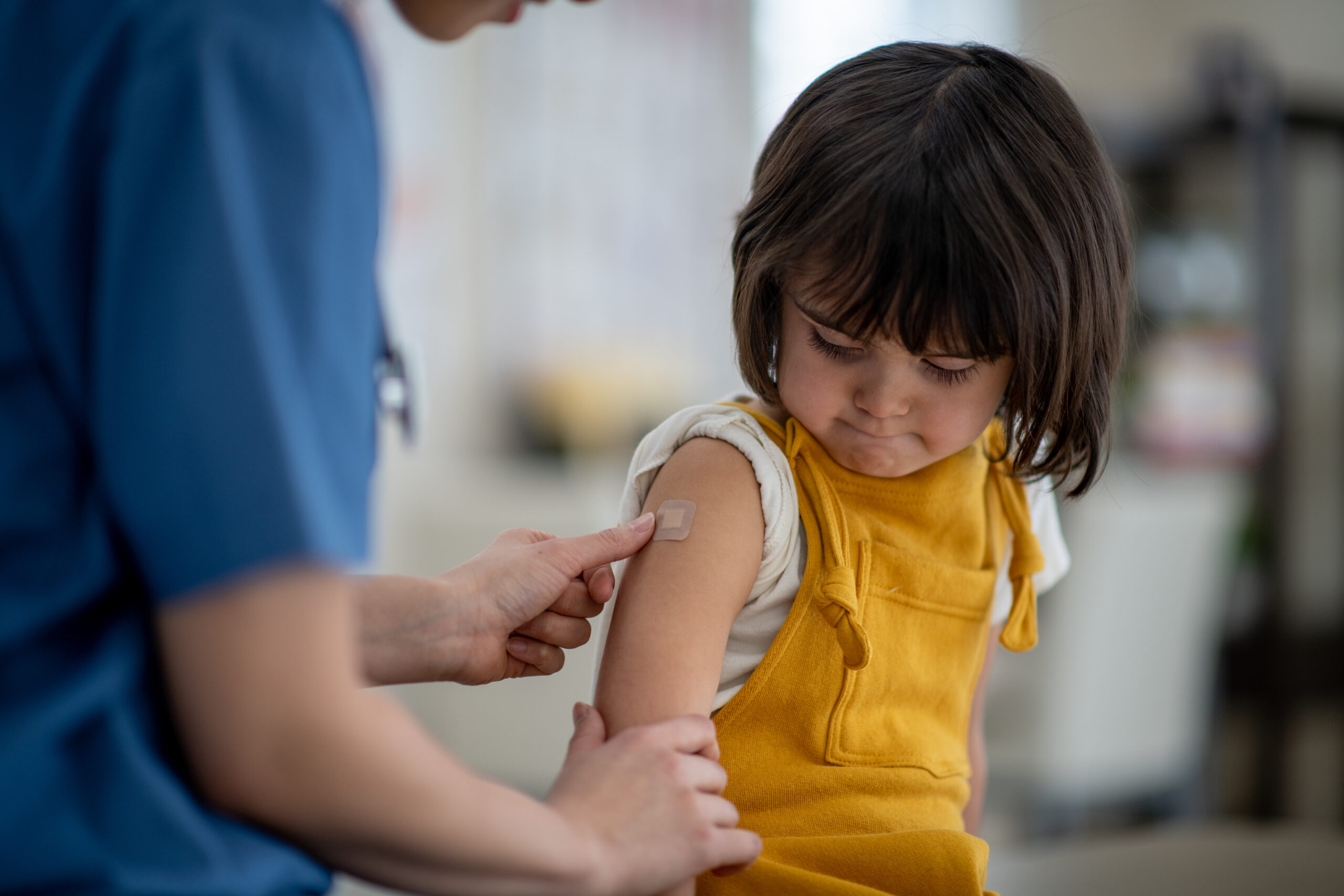
August is National Immunization Awareness Month (NIAM), an annual observance that highlights the importance of vaccination across the lifespan. While immunizations are often associated with childhood, vaccines play a critical role in protecting individuals of all ages from vaccine-preventable diseases. During NIAM, public health professionals, healthcare providers, and community leaders are encouraged to promote awareness of recommended vaccinations and help ensure that individuals remain up to date on their immunization schedules.1, 2
National Immunization Awareness Month also provides an opportunity for clinicians and public health practitioners to stay informed about changes to vaccine recommendations and strengthen their communication skills when discussing vaccines with patients and families. Effective communication is especially important when addressing vaccine hesitancy. The American Academy of Pediatrics (AAP) provides evidence-based strategies and communication tools that help healthcare providers engage respectfully with parents and caregivers who have questions about vaccinations.3
Vaccination: One of Public Health’s Greatest Achievements
To appreciate the value of modern immunization programs, it is helpful to understand their history. Prior to inoculation, or variolation as it was known in the eighteenth century, smallpox was one of the deadliest diseases in the world. It is estimated that approximately three out of every ten people infected with smallpox died from the disease.4
After losing his young son to smallpox in 1736, Benjamin Franklin became a strong advocate for inoculation. Through correspondence with physicians and scientists, Franklin documented the procedures being used and promoted their benefits. Historians believe that these efforts helped influence General George Washington’s decision to require inoculation of Continental Army recruits during the Revolutionary War, a move credited with preserving military readiness and reducing deaths from disease.4
The scientific foundation for modern vaccination continued to evolve during the nineteenth century. Louis Pasteur’s work on germ theory transformed the understanding of infectious diseases and led to the development of vaccines for anthrax and rabies. Pasteur’s pioneering research established principles that would guide vaccine development for generations to come.4
The twentieth century witnessed remarkable progress in disease prevention through vaccination. Global efforts led to the eradication of smallpox, with the final naturally occurring case identified in 1977 and the World Health Organization officially declaring the disease eradicated in 1980.4 Since then, vaccines have prevented millions of deaths from diseases such as diphtheria, measles, polio, pertussis, tetanus, hepatitis B, tuberculosis, and many others.
According to the World Health Organization, immunization efforts have saved more than 154 million lives worldwide over the past 50 years, reducing infant mortality by approximately 40%.5 The Centers for Disease Control and Prevention (CDC) estimates that routine childhood immunizations save approximately four million lives globally each year.6
Today, more than 25 safe and effective vaccines provide protection against life-threatening diseases throughout the lifespan.7 Vaccination is also among the most cost-effective public health interventions available. The CDC estimates that every dollar invested in immunization in low- and middle-income countries yields approximately $52 in economic returns through reduced healthcare costs and productivity losses.8
The National Picture:
The impact of vaccination in the United States has been extraordinary. Among children born between 1994 and 2023, routine childhood immunizations are estimated to have prevented approximately 32 million hospitalizations and saved more than $552 billion in direct healthcare costs.9 The total societal savings are estimated at approximately $2.7 trillion8 Most importantly, routine childhood vaccinations are estimated to have prevented more than 1.1 million deaths among U.S. children during this period.8, 9
The benefits of vaccination extend beyond preventing acute illness. Communities with high vaccination coverage are also protected from the long-term health consequences associated with vaccine-preventable diseases. For example, many Americans no longer experience devastating conditions such as post-polio syndrome, congenital rubella syndrome, or immune complications associated with measles infection. In addition, widespread use of the human papillomavirus (HPV) vaccine has contributed to substantial reductions in cervical precancers among vaccinated populations.9
The importance of vaccination was demonstrated again during the COVID-19 pandemic. Through unprecedented scientific collaboration, effective vaccines were developed, tested, and distributed in record time. Researchers estimate that COVID-19 vaccination prevented approximately 18.5 million hospitalizations and three million deaths in the United States by late 2022.10
The evidence is overwhelming: vaccination remains one of the most successful and impactful public health interventions in modern history.
Why this Matters Now:
The success of vaccination programs over the last century has created a generation of Americans with little direct experience with diseases such as polio, measles, diphtheria, and tetanus. As a result, the benefits of immunization can sometimes be taken for granted.
However, declining childhood vaccination rates have raised concerns among public health professionals nationwide. Public schools require proof of vaccination for school entry, although exemption policies vary by state. Medical exemptions may be granted when vaccination is contraindicated because of specific health conditions or severe allergies. Some states also permit religious or personal belief exemptions, while others have eliminated nonmedical exemptions altogether.11,12
According to CDC data, vaccine exemption rates among kindergarten students reached a record high of 3.6% during the 2024-2025 school year.11 While this percentage may appear small, exemptions often cluster geographically within communities and school systems. Consequently, some communities may have substantially lower vaccination coverage than national averages.
Public health experts emphasize the importance of maintaining high vaccination rates to preserve community immunity. High levels of community protection help safeguard individuals who cannot receive vaccines because of medical conditions and infants who are too young to be fully vaccinated. When vaccination coverage declines, communities become increasingly vulnerable to outbreaks of vaccine-preventable diseases.13
Measles Resurgence: A Reminder of the Importance of Community Immunity
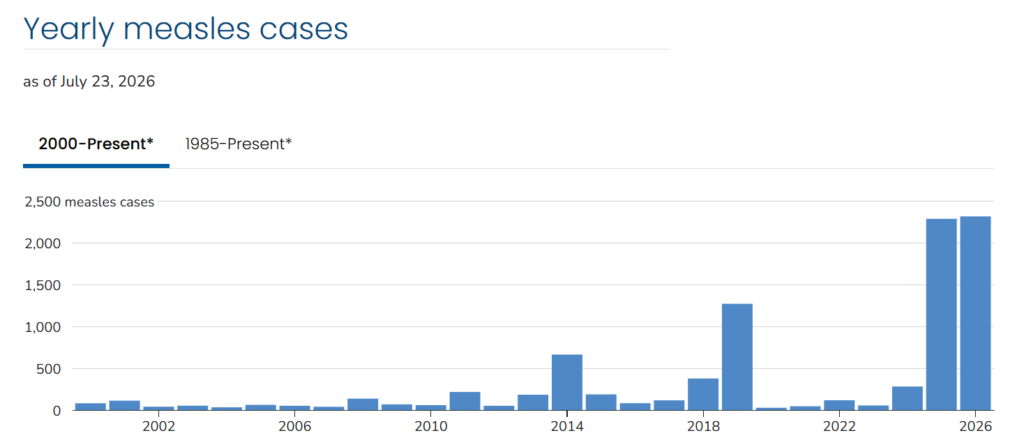
The United States is currently experiencing the highest number of measles cases reported in more than two decades.14 An outbreak that began in an under-vaccinated community in the Texas Panhandle in January 2025 subsequently spread to multiple states (Figure 1).15
According to CDC surveillance data, approximately 93% of measles cases reported during 2025 and 2026 occurred among unvaccinated individuals.15 In 2025, three measles-related deaths were reported in the United States, including deaths among children. These were the first measles deaths reported in more than a decade.16, 17
Public health officials have warned that kindergarten vaccination coverage has dropped below the 95% threshold historically associated with protection against sustained measles transmission.17 As vaccination coverage declines, communities become increasingly vulnerable to outbreaks. Vaccination remains the safest and most effective way to prevent measles and protect vulnerable populations.
Michigan’s Story
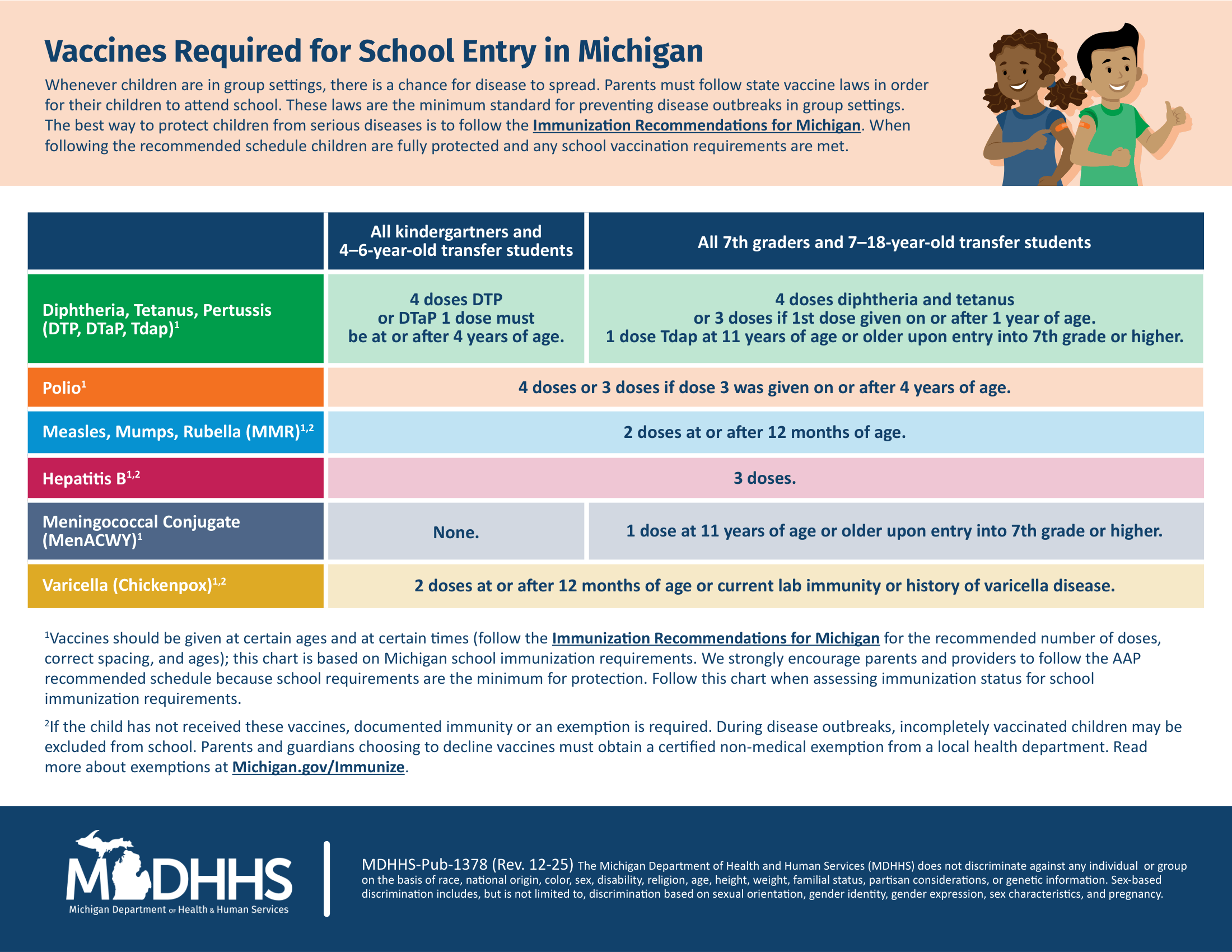
In Michigan, children entering school are required to receive a series of immunizations unless they have obtained an approved medical or nonmedical waiver.18 Required vaccinations help protect students, staff, and families from the spread of vaccine-preventable diseases in educational settings (Figure 2).18
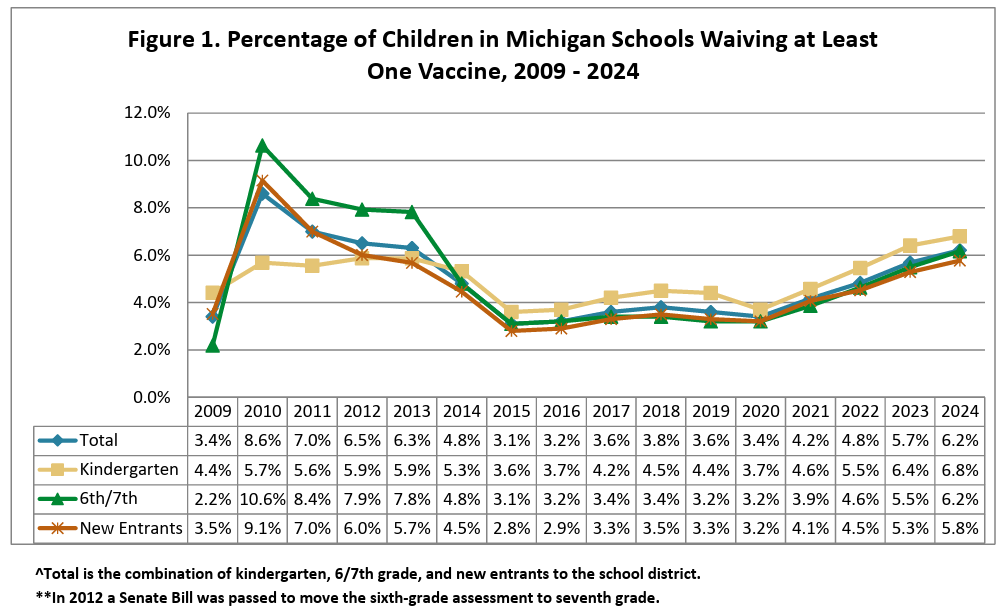
The Michigan Department of Health and Human Services (MDHHS) reported that 90.6% of children entering public schools in 2024 had completed all required vaccinations.18, 19 Vaccination coverage among private school students was lower, at approximately 82%. Both rates fall below the 95% level often cited as necessary to prevent outbreaks of highly contagious diseases such as measles.19, 20
MDHHS also reported that 6.8% of Michigan kindergarten students received immunization waivers in 2024, with more than half of those waivers granted for philosophical or personal reasons.18 These findings suggest that many communities throughout the state may be vulnerable to vaccine-preventable disease transmission if vaccination coverage continues to decline.
Michigan residents can review immunization records through the Michigan Care Improvement Registry (MCIR), the state’s immunization information system. MCIR serves as a central repository for vaccination records and allows healthcare providers, local health departments, schools, and individuals to access immunization information. The system helps identify immunization gaps, supports compliance with school requirements, and assists providers in ensuring patients remain up to date with recommended vaccinations. Parents and guardians may also use the system to access their children’s immunization records.
For more information, visit Michigan Care Improvement Registry: https://mcir.org/
The Role of Public Health
Michigan and the nation are at a critical point in maintaining the progress achieved through decades of successful immunization programs. Public health professionals play a key role in providing accurate information, addressing misconceptions, and building trust within the communities they serve.
Strong partnerships between public health agencies, healthcare providers, schools, faith-based organizations, and community leaders are essential. Schools are often among the first institutions to identify potential communicable disease outbreaks and benefit from having trusted public health partners available for consultation and support.
Public health professionals should also support evidence-based guidance from organizations such as the American Academy of Pediatrics (AAP), American Medical Association (AMA), American College of Obstetricians and Gynecologists (ACOG), Centers for Disease Control and Prevention (CDC), and the Michigan Department of Health and Human Services. These organizations continue to provide scientific evidence regarding vaccine safety, effectiveness, and public health benefits.
Finally, public health practitioners should remain informed about state and federal policies that may influence vaccine access, school immunization requirements, and exemption processes. Sharing evidence-based information with policymakers, educators, healthcare organizations, and community stakeholders remains an important component of public health advocacy.21
MPHA Call to Action
For more than two centuries, immunization has protected individuals, strengthened communities, and prevented countless illnesses, hospitalizations, and deaths. Yet these public health gains can only be maintained through continued commitment to vaccination.
This National Immunization Awareness Month, the Michigan Public Health Association encourages every Michigander to review their immunization status, discuss recommended vaccines with a trusted healthcare professional, and ensure that children are protected before returning to school. By working together to promote evidence-based prevention strategies, we can preserve one of public health’s greatest achievements and help keep Michigan communities healthy for generations to come.
MPHA also calls upon its members and public health partners to serve as trusted voices within their communities. Whether through educating patients and families, collaborating with schools and local health departments, advocating for evidence-based public health policies, or sharing accurate vaccine information through professional and community networks, each of us has a role to play in protecting Michigan’s health. Small actions, such as answering questions, correcting misinformation, supporting immunization clinics, or encouraging vaccine confidence, can have a lasting impact on community well-being.
As public health professionals, we are uniquely positioned to help ensure that all Michiganders have access to reliable information and lifesaving vaccines. Together, we can strengthen vaccine confidence, increase vaccination coverage, and protect future generations from preventable disease.
References:
- Centers for Disease Control and Prevention. Global Immunization Fast Facts. CDC, https://www.cdc.gov/global-immunization/fast-facts/index.html. Accessed 30 July 2026.
- Centers for Disease Control and Prevention. National Immunization Awareness Month (NIAM). CDC, https://www.cdc.gov/vaccines/php/national-immunization-awareness-month/index.html. Accessed 30 July 2026.
- American Academy of Pediatrics. Talking with Vaccine-Hesitant Parents. American Academy of Pediatrics, https://www.aap.org/en/patient-care/immunizations/communicating-with-families-and-promoting-vaccine-confidence/talking-with-vaccine-hesitant-parents/. Accessed 30 July 2026.
- Centers for Disease Control and Prevention. History of Smallpox. CDC, https://www.cdc.gov/smallpox/about/history.html. Accessed 30 July 2026.
- World Health Organization. “Global Immunization Efforts Have Saved at Least 154 Million Lives over the Past 50 Years.” World Health Organization, 24 Apr. 2024, https://www.who.int/news/item/24-04-2024-global-immunization-efforts-have-saved-at-least-154-million-lives-over-the-past-50-years. Accessed 31 July 2026.
- Centers for Disease Control and Prevention. Measles Cases and Outbreaks Data and Research. CDC, https://www.cdc.gov/measles/data-research/index.html. Accessed 30 July 2026.
- Centers for Disease Control and Prevention. Safety and Effectiveness of HPV Vaccination. CDC, https://www.cdc.gov/hpv/hcp/vaccination-considerations/safety-and-effectiveness-data.html. Accessed 30 July 2026.
- Hill, Helen A., et al. “Estimated Clinical and Economic Impact of Routine Childhood Immunizations in the United States, 1994-2023.” Morbidity and Mortality Weekly Report, vol. 73, no. 31, 2024, https://www.cdc.gov/mmwr/volumes/73/wr/mm7331a2.htm. Accessed 30 July 2026.
- History of Vaccines. Vaccine Timeline: An Overview. College of Physicians of Philadelphia, https://historyofvaccines.org/history/vaccine-timeline/overview/. Accessed 30 July 2026.
- Commonwealth Fund. Two Years of COVID-19 Vaccines Prevented Millions of Deaths, Hospitalizations. Commonwealth Fund, 2022, https://www.commonwealthfund.org/blog/2022/two-years-covid-vaccines-prevented-millions-deaths-hospitalizations. Accessed 30 July 2026.
- Centers for Disease Control and Prevention. SchoolVaxView: Vaccination Coverage and Exemptions among Kindergartners, 2024-2025 School Year. CDC, https://www.cdc.gov/schoolvaxview/data/index.html. Accessed 30 July 2026.
- Kaufman, Joseph, et al. “Medical vs. Nonmedical Immunization Exemptions for School Attendance in the United States.” Pediatrics, vol. 156, no. 2, 2025, https://publications.aap.org/pediatrics/article/156/2/e2025072714/202656/. Accessed 30 July 2026.
- Vaccination Facts. History of Vaccination. Vaccination Facts, https://www.vaccinationfacts.com/research/history. Accessed 30 July 2026.
- Johns Hopkins Bloomberg School of Public Health, International Vaccine Access Center. 2026 U.S. Measles Cases Surpass 2025 Levels. Johns Hopkins University, 2026, https://publichealth.jhu.edu/ivac/2026/2026-us-measles-cases-surpass-2025-level. Accessed 30 July 2026.
- Centers for Disease Control and Prevention. “Measles Cases and Outbreaks.” CDC, 24 July 2026, https://www.cdc.gov/measles/data-research/index.html. Accessed 31 July 2026.
- O’Leary, Sean T. “U.S. Childhood Vaccination Rates Continue to Fall, CDC Data Show.” CIDRAP News, Center for Infectious Disease Research and Policy, University of Minnesota, https://www.cidrap.umn.edu/childhood-vaccines/us-childhood-vaccination-rates-continue-fall-cdc-data-show. Accessed 30 July 2026.
- World Health Organization. Measles Outbreak in the United States of America (DON561). WHO, 2025, https://www.who.int/emergencies/disease-outbreak-news/item/2025-DON561. Accessed 30 July 2026.
- Michigan Department of Health and Human Services. 2024 School Immunization Assessment Summary Report. MDHHS, 2024, https://www.michigan.gov/mdhhs/-/media/Project/Websites/mdhhs/Adult-and-Childrens-Services/Children-and-Families/Immunization-Information/School-Waiver-Information/School-Summary_ADA_2024.pdf. Accessed 30 July 2026.
- International Vaccine Access Center. “Across the U.S., Childhood Vaccination Rates Continue to Decline.” Johns Hopkins Bloomberg School of Public Health, 20 Aug. 2025, https://publichealth.jhu.edu/ivac/2025/across-the-us-childhood-vaccination-rates-continue-to-decline. Accessed 31 July 2026. [publichealth.jhu.edu]
- Yen, MeiLan K., et al. “Protecting Communities through High Vaccination Coverage.” JAMA, vol. 333, no. 17, 2025, https://jamanetwork.com/journals/jama/fullarticle/2833361. Accessed 30 July 2026.
- Michigan Senate Republicans. Senate, House Bills Would Preserve Parents’ Vaccination Exemption Rights. Michigan Senate Republicans, https://www.misenategop.com/senate-house-bills-would-preserve-parents-vaccination–exemption-rights/. Accessed 30 July 2026.
Updated 07/31/2026