Understanding the Healthcare Impact of the One Big Beautiful Bill
Kelsey Phelps, Hope Rollins, MBA, & Marcia Mastracci Ditmyer, PhD
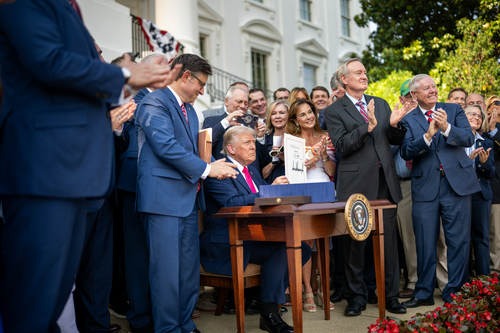
On July 4, 2025, President Donald J. Trump signed into law the One Big Beautiful Bill, introducing sweeping changes across multiple areas of policy, including taxation, immigration, and healthcare. Among the most significant impacts are the modifications to the American healthcare system, particularly affecting Medicaid, eligibility requirements, and the Supplemental Nutrition Assistance Program (SNAP). These changes carry profound implications for low-income and vulnerable populations. As this legislation takes effect, both healthcare professionals and the broader public need to understand its potential consequences.
Medicaid Modifications:
The One Big Beautiful Bill has a significant role in shaping the future of Medicaid service eligibility within the United States. According to the White House’s statement related to the new bill, the One Big Beautiful Bill seeks to “strengthen Medicaid by eliminating waste, fraud and abuse and blocking illegal immigrants from receiving Medicaid.” 1 It has been communicated by officials that there have been no direct Medicaid “cuts,” but rather changes in eligibility for applicants and current recipients. The bill seeks to remove fraud and abuse of Medicaid services by removing eligibility for undocumented immigrants and enforcing work requirements. 2 However, it is speculated by individuals that Medicaid will experience “cuts” through the removal of benefits to many current recipients. 3 With 71,100,316 American citizens enrolled in Medicaid as of April 2025, 4 it is expected that approximately 10 million individuals will lose eligibility for Medicaid services. 5 These changes raise concerns about access to care, particularly for low-income individuals and families who rely on Medicaid.
SNAP Modifications:
Another area of the new legislation which has a major impact on the United States healthcare system is the changes in eligibility for individuals receiving the Supplemental Nutrition Assistance Program (SNAP) benefits. Writers for AP News spoke on this topic, stating “The Congressional Budget Office estimates that 11.8 million more Americans would become uninsured by 2034 if the bill became law and 3 million more would not qualify for food stamps, also known as SNAP benefits.” 6 A key provision of the bill shifts financial responsibility for SNAP from the federal government to individual states, aiming to reduce federal expenditures while encouraging localized program management. This shift places increased pressure on state governments, many of which are already facing financial limits. As states determine how to allocate funds, it is expected that some may lower benefit levels or limit access to balance the increase in costs. In addition, by tightening eligibility requirements, individuals experiencing poverty or food insecurity may struggle to navigate the system and retain their benefits.
Implications:
Currently, more than 62% of SNAP participants nationwide are in families with children, and over 27% are in households that include older adults or individuals with disabilities. Children alone account for 39% of all SNAP recipients, while adults over the age of 60 represent 19%. In Michigan, nearly 1.5 million people, approximately 15% (or 1 in 7) of the state’s population, rely on SNAP benefits. A large share of these recipients are families with children (59%), individuals with disabilities or older adults (39%), and an estimated 41,000 veterans. The One Big Beautiful Bill could put both food assistance and healthcare access at risk for nearly 950,000 Michiganders.7
Effect on Healthcare Workforce and Providers:
While many concerns focus on the impact on the low-income and vulnerable populations, it is important to also reflect on the effect on those serving in the healthcare sector. With the decrease in eligibility to receive Medicaid and SNAP services, it is projected that many health workers will lose their jobs. According to Shannon Pettypiece of NBC News, less funding for Medicaid could lead to a decrease of approximately 500,000 jobs in the healthcare field within the next 10 years. 8 With rural regions having many more individuals on Medicaid, it is expected that less individuals will seek healthcare at rural locations. To support healthcare workers in rural regions, the Senate legislation has allocated $25 billion dollars of funding towards rural hospitals.8 While this funding aims to decrease the strain on rural healthcare systems, it is unclear whether it will be enough to prevent job losses across healthcare locations.
Conclusion:
As the healthcare implications of the One Big Beautiful Bill begin to take effect, communities across the country are preparing for both immediate and long-term impacts. While supporters of the bill argue that the reforms promote personal responsibility and protect those who need assistance, critics of the bill warn that many individuals could be left without care and support. For healthcare providers, public health professionals, and the individuals who rely on these systems, the full consequences of the bill remain unclear. What is certain, however, is that the legislation marks a significant shift—one that will shape the landscape of American healthcare for years to come.
To read the official One Big Beautiful Bill, please visit the Congress’s website here.
Disclosure: The Michigan Public Health Association (MPHA) is a nonpartisan, nonprofit organization and is not affiliated with or funded by any government agency. The views expressed in this article do not represent an endorsement or opposition to any legislation.
References:
- The White House. (2025, July 4). President Trump’s One Big Beautiful Bill Is Now the Law. https://www.whitehouse.gov/articles/2025/07/president-trumps-one-big-beautiful-bill-is-now-the-law/
- The White House. (2025, June 29). Myth vs. Fact: The One Big Beautiful Bill. https://www.whitehouse.gov/articles/2025/06/myth-vs-fact-the-one-big-beautiful-bill/
- Robertson, L. (2025, June 6). Assessing Medicaid Coverage Losses Under House Reconciliation Bill. FactCheck.org. https://www.factcheck.org/2025/06/assessing-medicaid-coverage-losses-under-house-reconciliation-bill/
- Centers for Medicare & Medicaid Services. (2025, April). April 2025 Medicaid & CHIP Enrollment Data Highlights. Medicaid.gov. https://www.medicaid.gov/medicaid/program-information/medicaid-and-chip-enrollment-data/report-highlights
- Euhus, R., Williams, E., & Rudowitz, R. (2025, July 23). Allocating CBO’s Estimates of Federal Medicaid Spending Reductions Across the States: Enacted Reconciliation Package. Kaiser Family Foundation. https://www.kff.org/medicaid/issue-brief/allocating-cbos-estimates-of-federal-medicaid-spending-reductions-and-enrollment-loss-across-the-states/
- Freking, K., & Mascaro, L. (2025, July 4). What’s in the tax and spending bill that Trump has signed into law. AP News. https://apnews.com/article/what-is-republican-trump-tax-bill-f65be44e1050431a601320197322551b
- Center on Budget and Policy Priorities. A Closer Look at Who Benefits from SNAP: State-by-State Fact Sheets. Updated January 21, 2025 by Catlin Nchalo. https://www.cbpp.org/research/food-assistance/a-closer-look-at-who-benefits-from-snap-state-by-state-fact-sheets#Michigan
- Pettypiece, S. (2025, June 30). Who would win and who would lose in Republicans’ “big, beautiful bill.” NBC News. https://www.nbcnews.com/politics/congress/republican-big-beautiful-bill-win-loses-rcna215910
Updated 07/29/2025
We would love to hear from you!
Make your voice heard by advocating for public health matters: